
Russia had imported 18,500 tonnes of seed material, including seed potatoes, in the tally reported by Interfax on 23 December 2025. Citing Rosselkhoznadzor, the agency put the decline at about one-third.
Crop-level imports fell at different rates
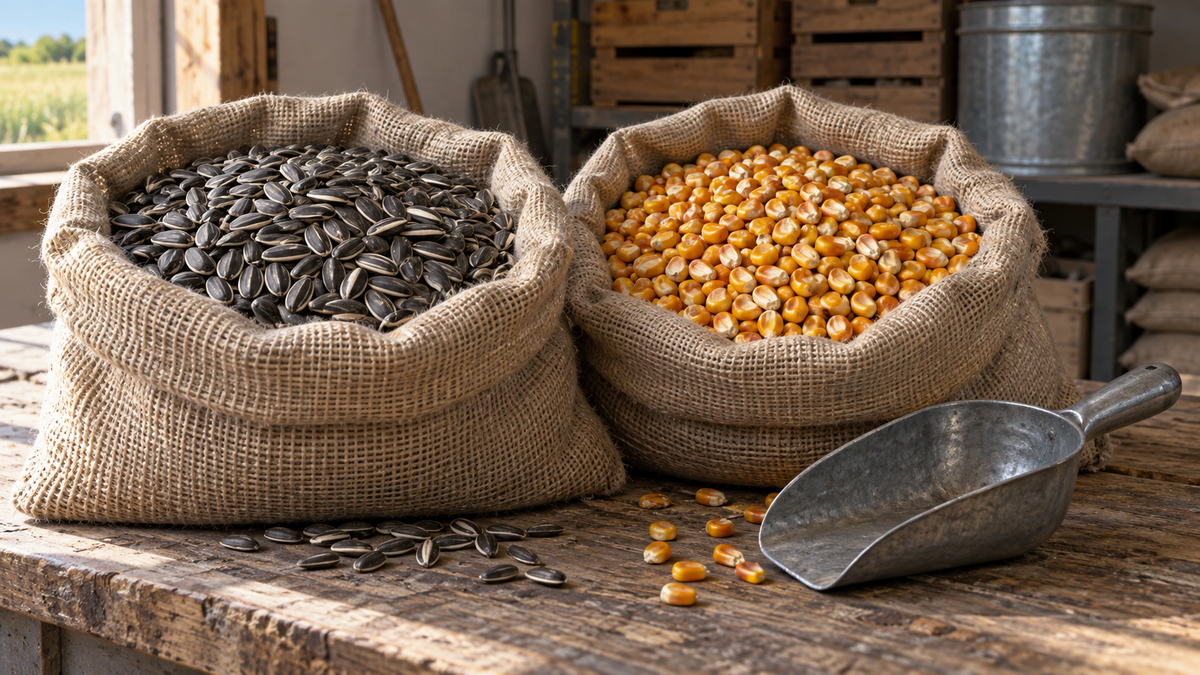
Sunflower seed imports dropped 92.9% to 525 tonnes; maize seed imports fell 90.1% to 295 tonnes, according to the same announcement.
These crop-specific declines should not be averaged to reconstruct the overall change. Each percentage has its own starting quantity, while the national total includes other categories. The rates describe the movement of the individual import series, not interchangeable contributions to the total.
A December report, not a closed calendar
The publication date is an important boundary. The statement appeared before the end of the calendar year. It should therefore be read as the position reported in December, rather than relabelled as a final total covering every day through 31 December. Any later full-year release would need its own date and comparison.
What a consistent comparison needs
- The same reporting period on both sides of the comparison.
- A stable definition of the seed or planting-material category.
- The same measurement unit, whether mass, item count or monetary value.

An earlier regional report also recorded a decline
A separate RBC Krasnodar report by Arina Verteletskaya on 25 September, relaying Delovaya Gazeta Yug's account of the regulator's regional press service, put Krasnodar Krai's January–August seed imports at 979 tonnes, down 66.7% year on year. The main crops listed were wheat, sunflower, melon, cabbage, cucumber and maize.
That earlier regional decline provides context, not a component that can simply be added to the December national figure. The two reports cover different periods and geographical boundaries. Nor does the sharper regional percentage establish an acceleration later in the year: it compares one region with its own earlier-year base.
The national December announcement and the earlier regional report therefore describe contraction at different scales. Neither import series, on its own, establishes a change in planted acreage or the amount spent by growers. Those conclusions require separate evidence about quantities available for planting and prices.
Your perspective
Share your thoughts on the story.