
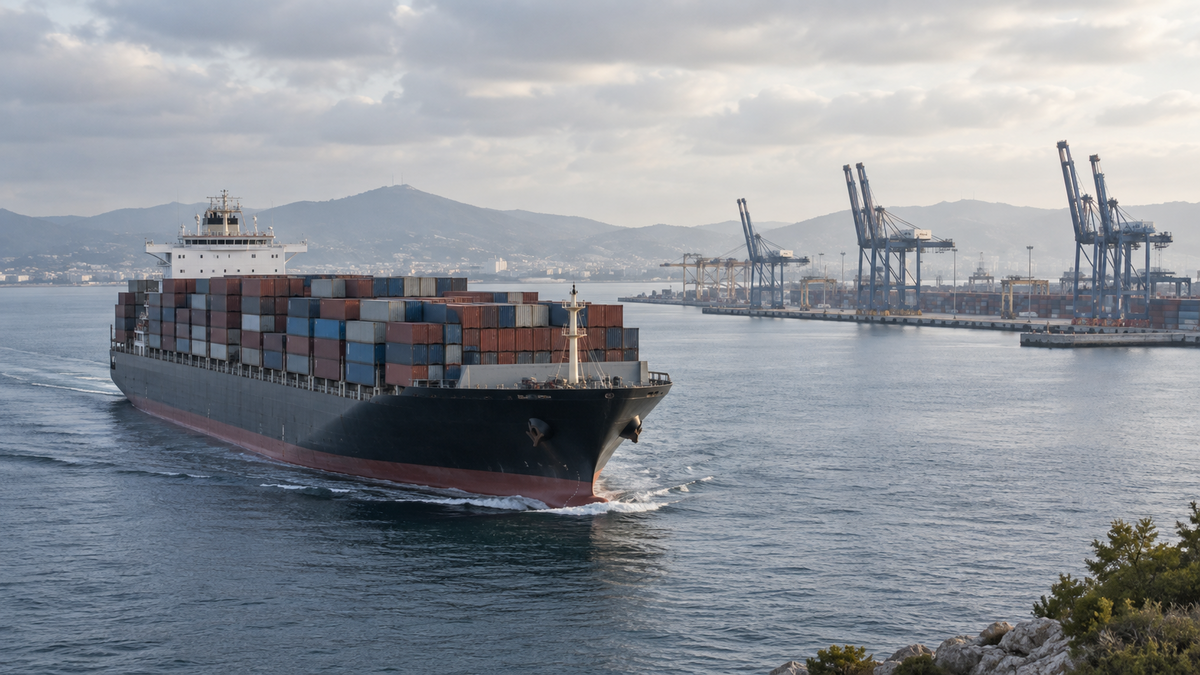
The OECD cut its global growth forecast on June 3, 2025, putting both 2025 and 2026 at 2.9%. Anadolu reported that trade barriers, financial conditions and policy uncertainty were weighing on the outlook. The new figures describe expected growth, not a contraction already recorded.
The two years started from different forecasts
The OECD's launch statement gives a more precise comparison with its March outlook. It revised the 2025 forecast down by 0.2 percentage points and the 2026 forecast by 0.1 points. The earlier baselines were therefore 3.1% and 3.0%, respectively; the common June figure does not mean that both revisions were identical.
- A forecast level describes the expected pace of expansion for a specified year.
- A revision measures the difference between two dated forecasts for that same year.
- A change in the level of output is a different calculation and should not be inferred from the revision alone.
Uncertainty reaches decisions before production
A company does not need to experience a completed fall in sales before uncertainty affects its decisions. Consider a manufacturer weighing an equipment order: if the future cost of imported components is unclear, waiting preserves flexibility but also postpones the intended expansion. This is an illustrative decision, not a reported event at a particular company.
The same distinction helps interpret changes in orders. Moving a purchase forward to secure existing terms alters its timing. Cancelling the purchase changes the amount of demand. Those actions can produce different short-term signals, even though both arise from uncertainty about trading conditions.

Use the June outlook as a dated baseline
For business planning, the useful question is which assumption would change a decision. A supplier-price assumption affects a cost estimate; a customer-demand assumption affects the expected volume of orders. Keeping those two assumptions separate avoids turning one global forecast into a uniform sales prediction for unrelated businesses.
The revision makes the June assessment weaker than the March assessment. It does not establish that every company faces the same decline, or that actual growth will match the projected rate. Subsequent information about trade rules, order books and investment decisions is needed to judge how the scenario develops.
Your perspective
Share your thoughts on the story.