
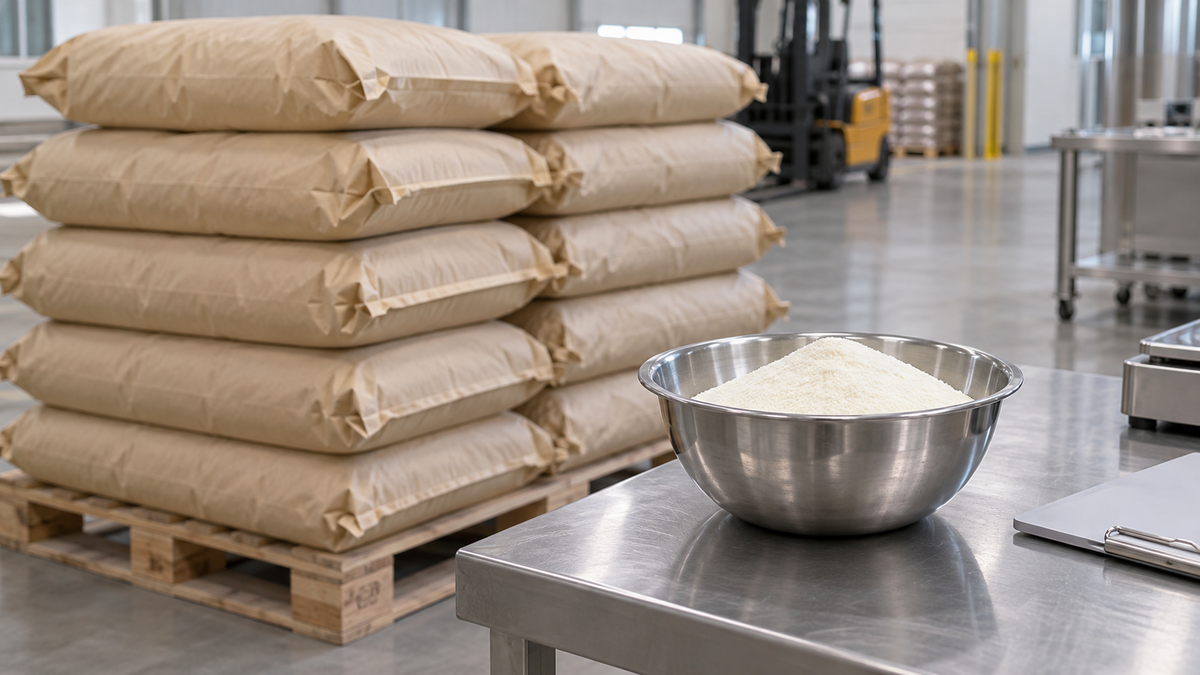
EkoNiva shipped its first batch of skimmed milk powder to Algeria in February 2026, according to Interfax's report of 2 March. The producer from Russia supplied a local dairy manufacturer and was preparing another, larger shipment. Regular exports were described as an intention, not an established delivery pattern.
An ingredient order, not a retail launch
The buyer's role makes this an industrial supply story. A delivery to a manufacturer should not be read as evidence that packaged consumer products have reached shop shelves. The commercial relationship concerns an ingredient entering another company's production process, with its own purchasing arrangements and requirements.
That distinction changes what a useful follow-up would examine. Retail distribution might be assessed through store coverage or individual product listings. An ingredient relationship instead raises questions about subsequent orders, the agreed product specification and the consistency of deliveries. Those are areas for further reporting, not additional results disclosed in the announcement.
From a first shipment to repeat supply

A first dispatch provides a starting point for a trading relationship. Repeat supply requires the parties to continue matching quantities and timing to the buyer's needs. The next order may be larger, smaller or differently scheduled; its meaning depends on the purchasing context rather than on a presumption that each shipment must exceed the last.
- Distinguish goods already dispatched from shipments still being prepared.
- Keep the destination-specific volume separate from figures for other markets.
- Track whether additional orders establish a recurring relationship.
- Separate the manufacturer's ingredient purchase from consumer retail distribution.
The next useful evidence is commercial continuity
The report does not disclose the size or value of the Algerian batch, the customer's identity or the contract terms. It therefore cannot establish a market share, revenue contribution or recurring sales rate. A shipment figure from another destination would not fill that gap and should not be attached to this transaction.
For now, the development is a new customer-destination combination for the producer's milk powder. Further dated information about completed deliveries would show whether the opening transaction develops into a continuing supply programme. Keeping the first shipment and the longer-term ambition separate gives readers a clear baseline for following that progress.
Your perspective
Share your thoughts on the story.