
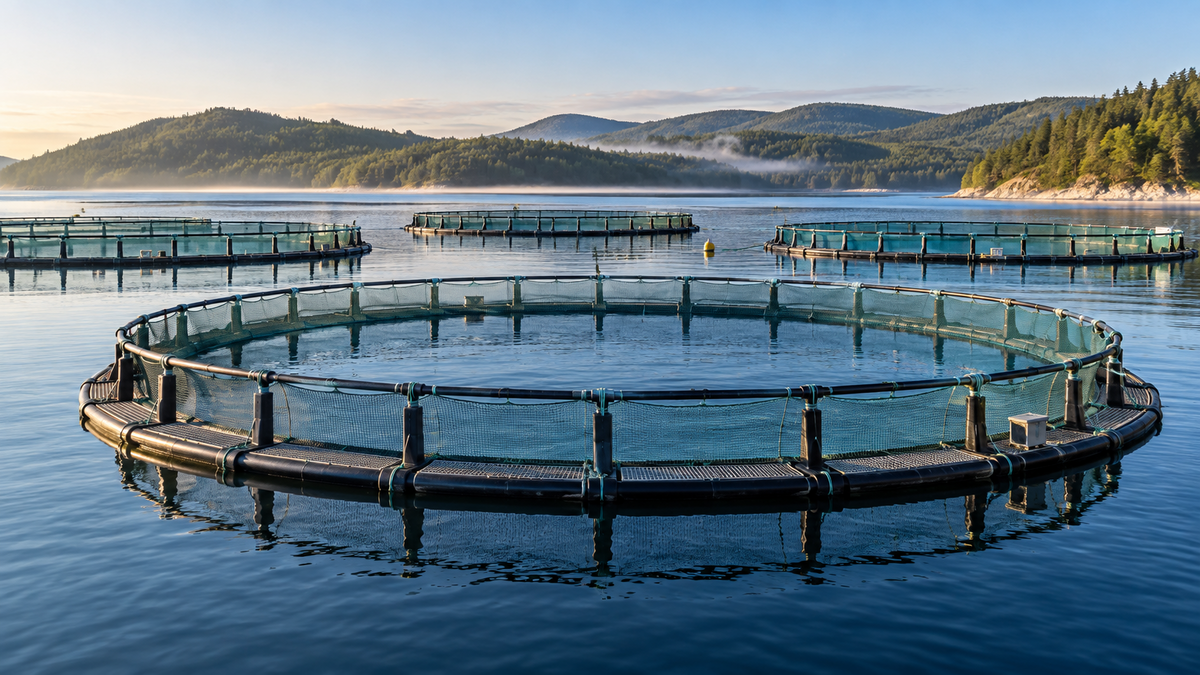
Aquaculture production in Russia reached 402,000 tonnes in 2023, up 4.8% from 383,500 tonnes a year earlier, Interfax reported on February 8. The agency attributed the figures to fisheries agency head Ilya Shestakov. The release concerns a completed production year, not a forecast for the year in which it appeared.
Farmed production has a distinct statistical boundary
The FAO glossary describes aquaculture as the farming of aquatic organisms, with intervention in their rearing and ownership of the cultivated stock. Its definition includes fish, molluscs, crustaceans and aquatic plants. It distinguishes this activity from harvesting aquatic organisms available as a common resource. The glossary explains the category; it does not independently verify the national figure.
That distinction matters when placing the announcement beside another fisheries headline. A number describing farmed output cannot simply stand in for a number describing catches. Before combining totals, the reporting boundaries need to be identified: otherwise a comparison may join unlike categories or include the same activity twice.

What to keep attached to the figure
- The reference period: the production year, not simply the date of publication.
- The reporting category: farmed production rather than an unspecified fisheries total.
- The measure: physical output, kept separate from sales value and commercial capacity.
A tonnage total and a revenue total answer different questions. Multiplying physical production by an assumed retail price would not establish producers' sales: the calculation would introduce a price and commercial boundary that the output figure does not supply. Nor does an aggregate change establish an identical change for each individual business.
The news is therefore a production update with a defined period and attribution. It offers a reference point for tracking the sector, while a conclusion about any particular producer would still require that producer's own comparable figures. Keeping those questions separate preserves the value of the reported result without turning it into an unsupported statement about profitability or consumer prices.
Your perspective
Share your thoughts on the story.